
IPTV vs Cable: Making the Smart Switch in 2026
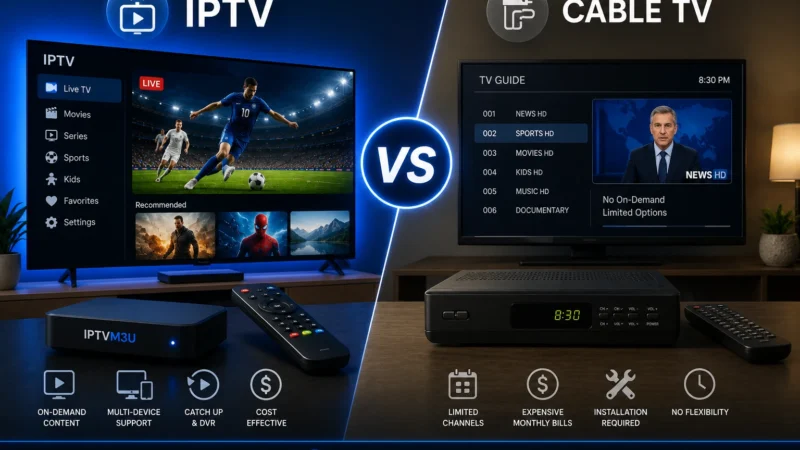
The way we watch television is undergoing its most significant transformation since the transition from broadcast to cable. Millions of households are cutting the cord every year, and the gap between traditional cable subscriptions and internet-based streaming is wider than ever. This guide provides an objective, data-backed comparison of iptv vs cable to help you make the right financial and functional decision for your home.
Direct Comparison: The Infrastructure Bottleneck
Legacy Cable Television
Traditional cable television relies on physical infrastructure that has not changed substantially in decades. Coaxial cables run from a neighborhood distribution hub into your home, connecting to a proprietary set-top box that decrypts and decodes the signal. This architecture has inherent limitations. The coaxial cable is vulnerable to signal degradation over long runs. Satellite dishes require a clear line of sight and fail during heavy rain or snow. Each television in your home requires its own receiver box, which means additional rental fees for every extra room. The hardware is proprietary, the installation requires a technician visit, and the entire system is tied to a physical address.
Modern IPTV Distribution
IPTV flips the model entirely. Instead of a dedicated physical cable, your content travels as digital data packets over the same high-speed internet connection you already use for browsing, social media, and work. No additional cables. No proprietary boxes. No technician appointments. The data arrives at your Smart TV, streaming stick, phone, or tablet through a simple app or player interface. The same subscription works on every device in your home simultaneously. The only infrastructure requirement is a stable broadband connection — something the vast majority of households already have.
This is the fundamental difference when you compare live tv costs. Cable charges you for physical infrastructure maintenance, hardware manufacturing, and field service technicians. IPTV delivers content through the internet you already pay for, eliminating those cost layers entirely.
Feature-by-Feature Breakdown
| Category | Traditional Cable | IPTV Premium |
|---|---|---|
| Monthly cost | $100–$180 | $12–$25 |
| Channel count | 200–300 (bundled) | 20,000+ (a la carte) |
| Contract length | 1–2 years with penalties | Month-to-month, no commitment |
| Hardware rental | $8–$15 per box per month | $0 (your own device) |
| Hidden fees | Broadcast, sports, HD, DVR | None |
| Multi-device support | Per-box additional charge | Multiple devices included |
| Video-on-demand | Limited, per-title pricing | Extensive VOD library included |
| 4K availability | Limited, premium surcharge | Wide selection, included |
| Annual estimated cost | $1,200–$2,160 | $144–$300 |
Content Scaling and Variety
Cable television forces you into pre-packaged tier bundles. Want one sports channel? You may need to buy the entire premium sports tier. IPTV offers true a la carte access to over 20,000 live channels spanning news, sports, cinema, entertainment, children's programming, and international content from every region of the world. Thepremium m3u channel availability in a modern IPTV subscription dwarfs what any cable provider can offer at any price point. In addition to live channels, a comprehensive VOD library with thousands of movies and complete TV series is included in the same flat monthly rate.
Cost Efficiency and Contract Freedom
This is where the comparison becomes undeniable. Cable providers layer fees. A $79.99 advertised package quickly becomes $120+ after broadcast fees, regional sports surcharges, HD technology fees, and box rentals. Worse, these fees are buried in the fine print and increase annually. Cancelling before the contract ends triggers early termination fees that can reach several hundred dollars.
IPTV subscriptions are transparent. You see the price. You pay the price. There are no additional fees because there is no physical infrastructure to maintain and no proprietary hardware to rent. You can cancel at any time with no penalty because there is no contract. A cord cutting financial analysis of a typical household shows annual savings of $1,000 or more.
Hardware Flexibility
Cable ties you to a specific wall outlet connected to a specific box in a specific room. Adding another television means calling the provider, paying for an additional box, and scheduling another technician visit. IPTV liberates your viewing from a single location. The same subscription works on your living room Smart TV, your bedroom Fire Stick, your iPad in the kitchen, your laptop at the office, and your phone on the go. There are no additional charges for additional screens within the connection limit. This flexibility is one of the most compelling reasons to replace traditional satellite television with an IPTV solution.
Addressing Common Transition Concerns
Switching from cable to IPTV raises legitimate questions. Here are the answers to the most common concerns.
Do I Have Fast Enough Internet?
Streaming live television requires a stable connection, but the requirements are lower than most people assume. A 25 Mbps connection is sufficient for smooth HD streaming. For 4K, 50 Mbps is recommended. The average global broadband speed in 2026 exceeds 100 Mbps in most developed markets, meaning the vast majority of households already have more than enough bandwidth.
Is the EPG (Channel Guide) Easy to Use?
Modern IPTV player applications like TiviMate, IPTV Smarters Pro, and OTT Navigator include integrated Electronic Program Guides that display channel schedules in a clean, familiar grid format. The EPG experience is identical to or better than the cable guide you are used to, with the added benefits of quick search, favorite channel lists, and thumbnail previews.
Is IPTV Too Complicated for Non-Technical Users?
No. The initial setup involves installing a free app on your device and entering a username and password provided by your subscription service. After that, the experience is identical to any other streaming app. If you can use Netflix, you can use an IPTV service on the same device. The interface is intuitive, and many providers offer step-by-step setup guides.
The Strategic Call-to-Action
The data is clear. Continuing to pay $1,200 to $2,160 per year for a cable subscription is mathematically inefficient when a premium IPTV subscription delivers more content, greater flexibility, and superior technology for $144 to $300 per year. The only question that remains is how much longer you are willing to overpay.
Our premium IPTV subscription is engineered to deliver the full cord-cutting experience without compromise. Over 20,000 live channels, an extensive VOD library, integrated anti-freeze network safety nets, elite server stability, and dedicated customer support. The setup takes minutes. The savings start immediately. The content never stops.
Make the Switch Today
Stop overpaying for cable. Get more channels, more flexibility, and better technology for a fraction of the price. Browse our plans and join thousands of cord-cutters who made the switch.
Key Takeaways
- Cable relies on physical coaxial infrastructure and proprietary boxes; IPTV delivers content as digital packets over your existing broadband connection
- Cable costs $1,200–$2,160/year with hidden fees and contracts; IPTV costs $144–$300/year with transparent pricing and no commitments
- IPTV offers 20,000+ live channels with extensive VOD compared to cable's limited, tiered bundles — the premium m3u channel availability is unmatched
- Minimum 25 Mbps is sufficient for HD streaming; most households already meet this requirement
- Our subscription delivers iptv vs cable advantages with anti-freeze technology, multi-device support, and elite server stability. Browse plans here
Related Articles
The Ultimate Guide to Live TV Streaming Without Cable
Complete cord-cutting guide to replace cable with internet streaming.
Anti-Freeze Technology: How We Ensure Stable Streaming
The engineering behind buffer-free, reliable streaming delivery.
IPTV Subscription Guide 2026
Everything you need to know before choosing your streaming plan.